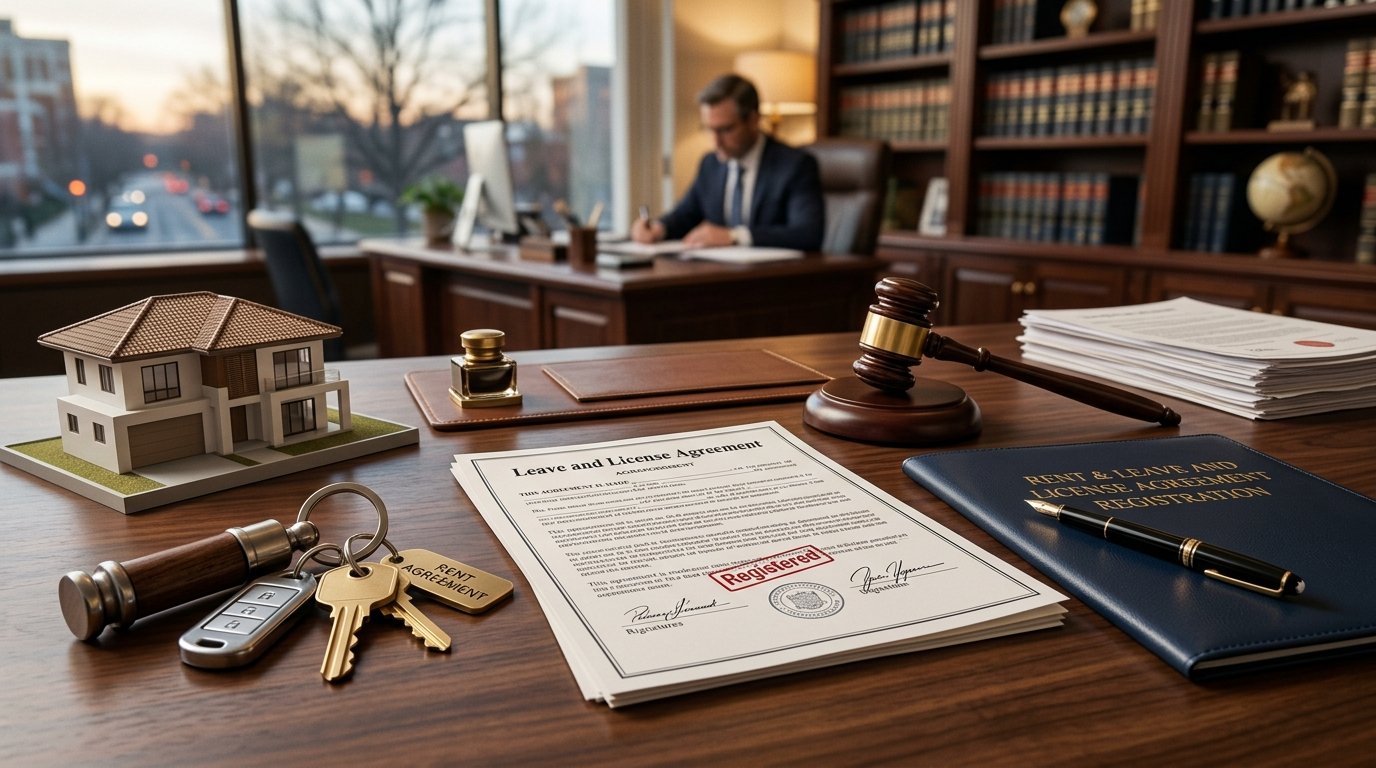
The "Leave and License" arrangement is an easement right defined and governed strictly under Section 52 of the Indian Easements Act, 1882. A Leave and License agreement guarantees that there is no transfer of proprietary interest or tenancy from the Licensor (Property Owner) to the Licensee (Tenant). It is merely a limited license to occupy and use the premises for the stipulated duration under mutually agreed contractual covenants.
If the Licensee fails to vacate or continues occupying the property upon the expiry of the License or upon expiry of the agreed notice period, they are considered unlawful occupants. Under Section 24 of the Maharashtra Rent Control Act, 1999, the Licensor can initiate summary eviction proceedings before the Competent Authority to promptly recover vacant possession along with penal damages.
"Where one person grants to another, or to a definite number of other persons, a right to do, or continue to do, in or upon the immovable property of the grantor, something which would, in the absence of such a right, be unlawful, and such right does not amount to an easement or an interest in the property, the right is called a license."
A property owner wishes to generate rental income from the asset while preserving complete ownership security. In the absence of an officially registered Leave and License agreement, tenants might attempt to claim tenancy rights, locking the premises into prolonged and expensive litigation. By drafting a rigorous Leave and License agreement registered on the Maharashtra IGR e-registration portal, landlords remain insulated against adverse possession and illegal tenancy claims.
It is strongly recommended to engage a knowledgeable legal advocate to draft your Leave and License agreement with clear lock-in periods, notice periods, utility payment obligations, maintenance fee allocations, and dispute resolution mechanisms.
Legal Comparison: Leave & License vs. Traditional Lease
| Key Feature | Leave and License (Recommended) | Traditional Lease Agreement |
|---|---|---|
| Governing Legislation | Section 52, Indian Easements Act, 1882 | Transfer of Property Act, 1882 |
| Transfer of Property Interest | No interest is transferred; only permissive occupation. | Creates an interest and legal estate in the property. |
| Tenant Eviction Procedure | Expedited summary eviction via Competent Authority under Maharashtra Rent Control Act. | Lengthy Civil Court proceedings requiring strict grounds of default. |
| Typical Duration | Commonly 11 months, up to 60 months with regular renewal. | Usually long-term (multi-year, commercial or perpetual). |
| Sub-Letting Rights | Strictly prohibited by default. | Possible unless specifically prohibited in contract. |
The reason residential properties in Maharashtra are predominantly leased under 11-month Leave & License agreements is that contracts under 12 months allow property owners to maintain flexibility and renew terms annually without attracting restrictive tenancy provisions.